Tri-Ply Stainless Steel for Everyday Cooking

Build a kitchen around the meals you actually make. This cookware pairs a durable cooking surface with a conductive middle layer, making it worth considering for home cooks who brown meat, prepare sauces, and want versatile uncoated pieces. Compare construction and handling before choosing your next pan.

What is tri-ply cookware?

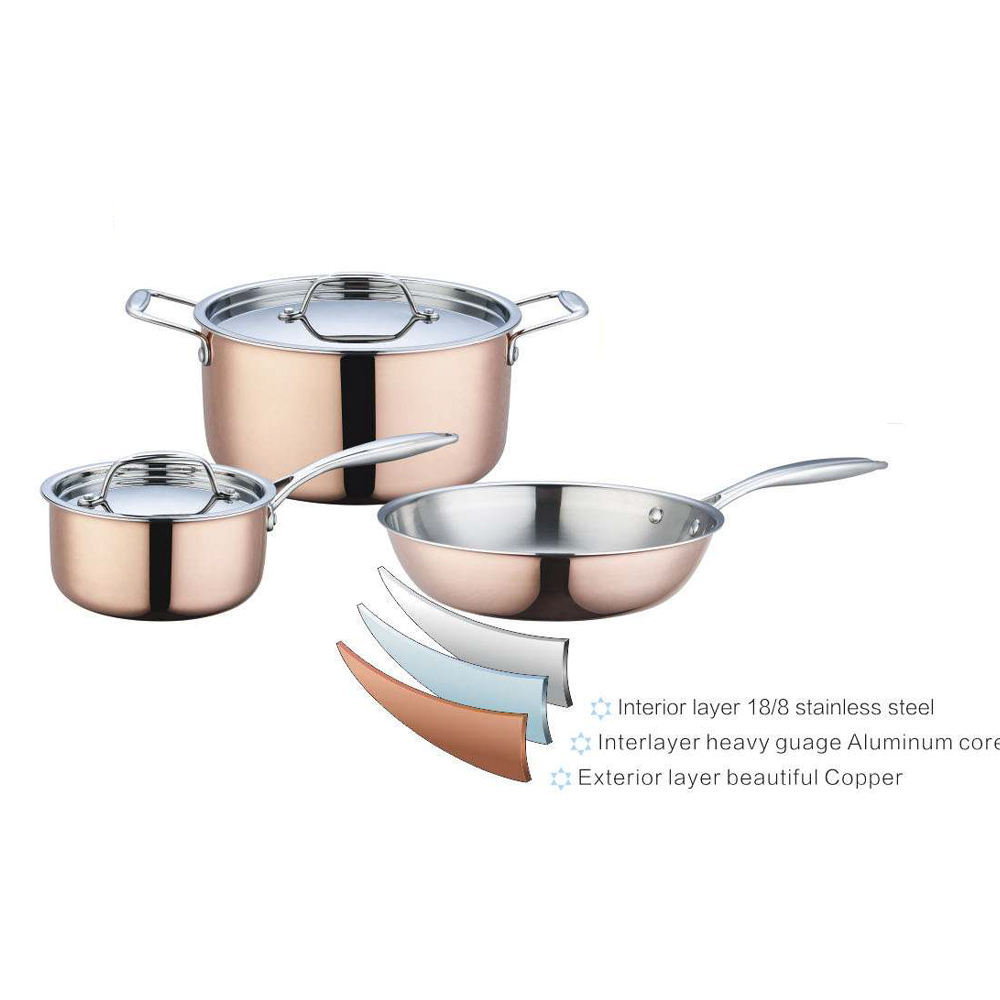
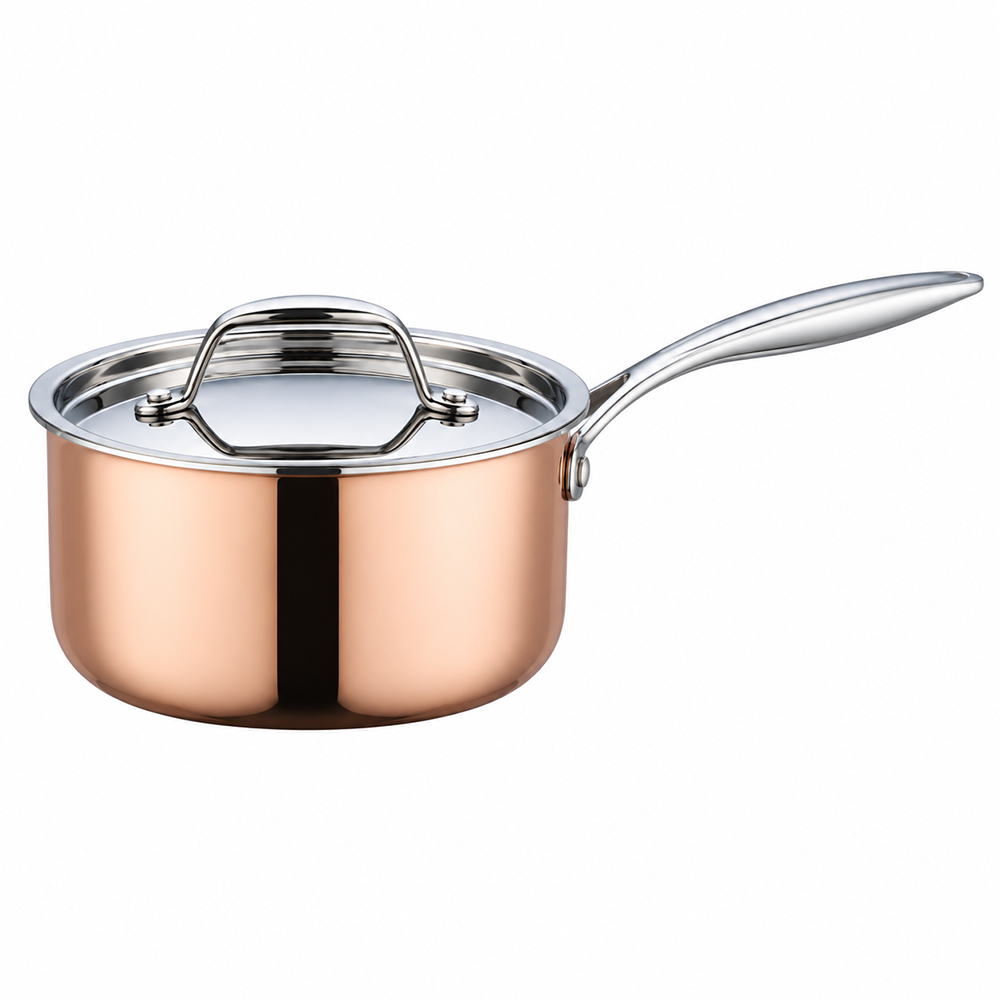
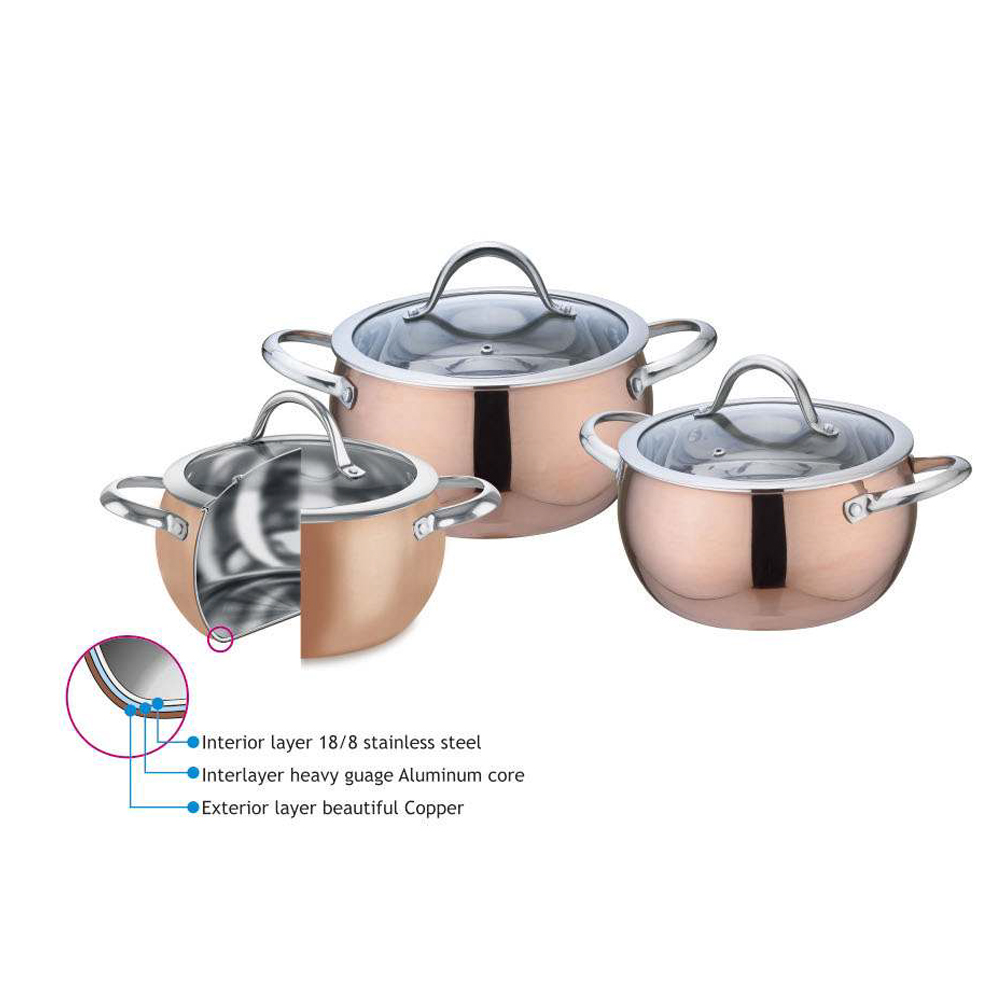
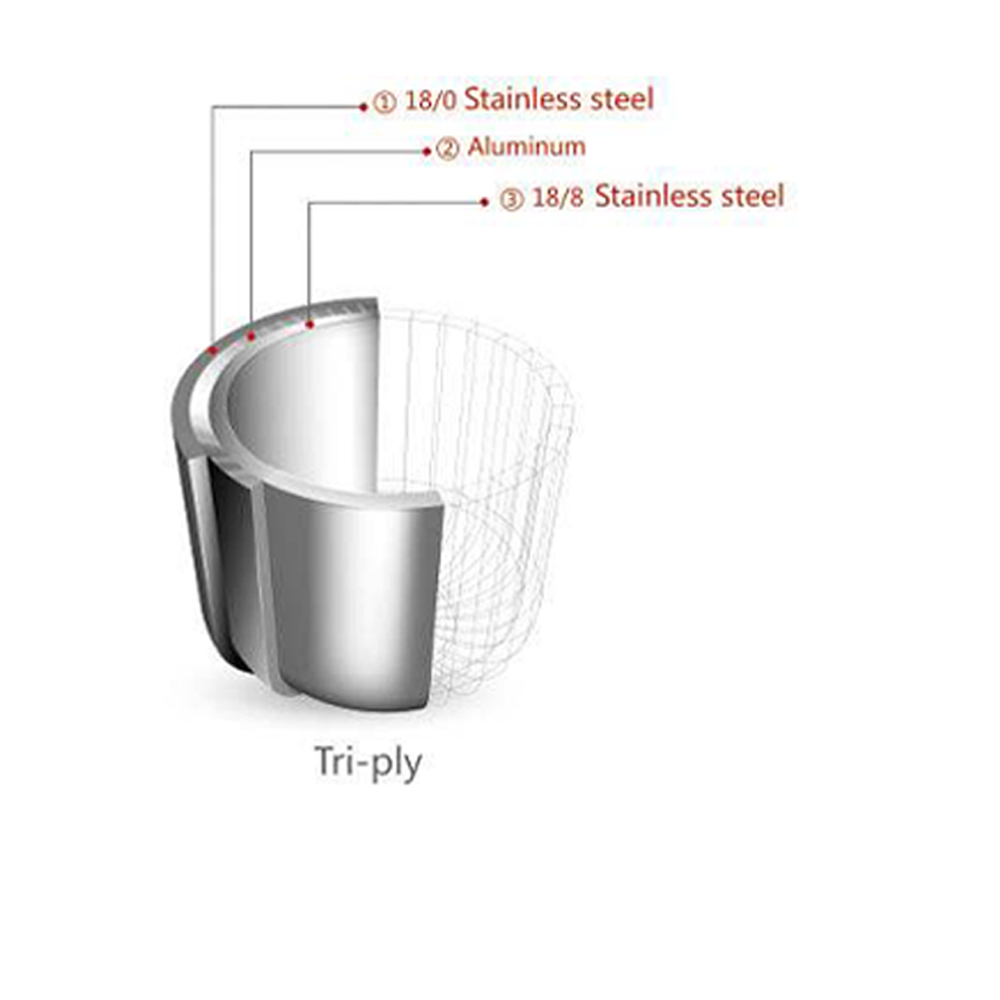
Tri-ply is cookware made with three bonded metal layers: a durable cooking surface, a conductive core, and an exterior layer. This combination helps improve heat distribution while keeping the core separate from food. The name describes the layer count; it does not establish metal grades, thickness, or sidewall coverage.

The bond joins materials with different strengths. Think of tri-ply’s appeal as a balance of responsiveness and practical durability, rather than a promise of effortless cooking or an unlimited lifespan.

Tri-Ply Stainless Steel

Explore two-cup and six-cup egg poacher pans with glass lids for different serving needs. Compare capacities and product details to find the right option for your kitchenware range and wholesale purchasing requirements.

How does 3-ply stainless steel construction work?

Three layers work together, with a conductive middle carrying energy across the vessel. A common configuration is shown below; verify each model’s specification rather than assuming every piece uses these grades

Layer Material Purpose
Interior 304 stainless steel Provides durable steel inside, with resistance to corrosion.
Core Aluminum core Its conductivity supports heat transfer and more even heat.
Exterior Magnetic 430 stainless steel The outer layer can support induction heating.

Is tri-ply suitable for induction and oven use?

Suitability depends on the individual model. Induction requires a compatible magnetic base; magnetic permeability matters here because the base must respond to the appliance’s electromagnetic field.

Check an induction-ready claim against both the product documentation and your induction cooktop requirements, including base diameter. Check the sizing requirements of induction stoves. For other cooktops, confirm compatibility with your specific appliance.

Oven limits, broiler suitability, handle ratings, and glass lids vary by model. “Heat-resistant” does not supply a temperature rating. Consult manufacturer guidance and the exact manual before moving a piece from stovetop to oven.

How do you choose a cookware set?

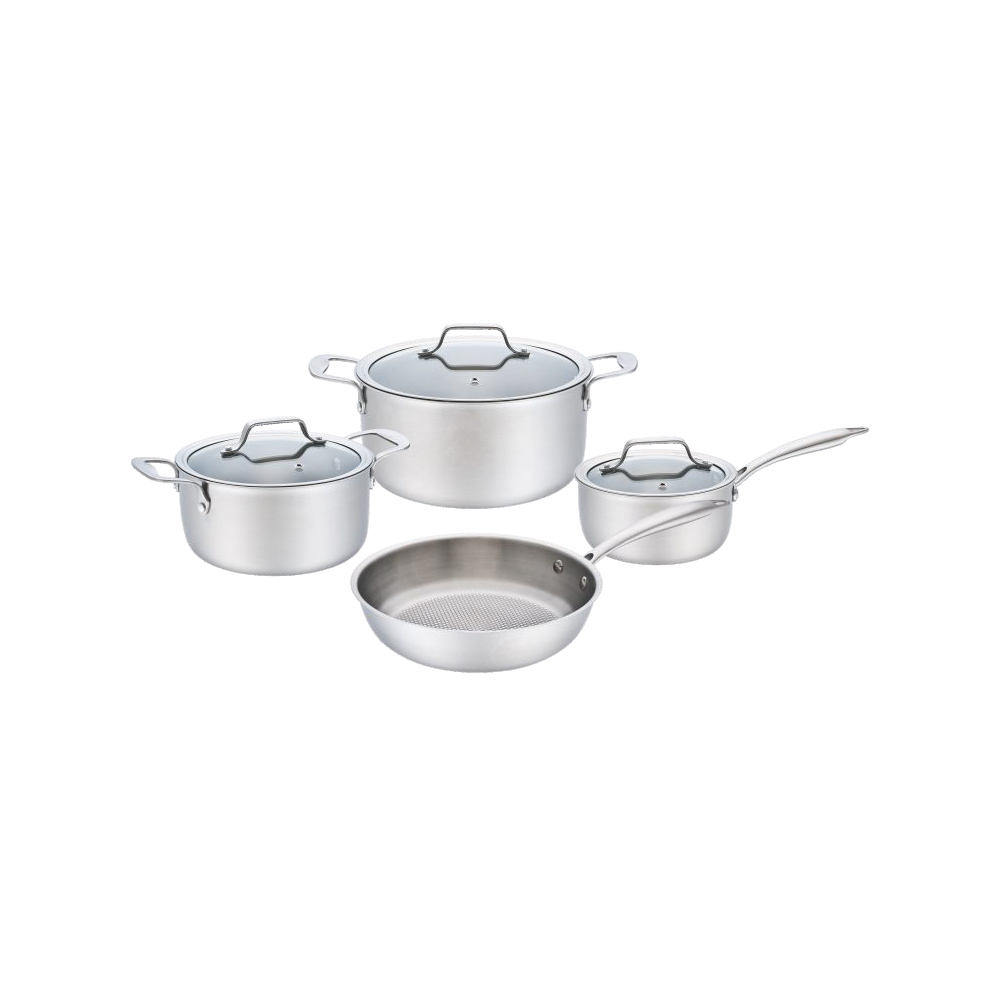
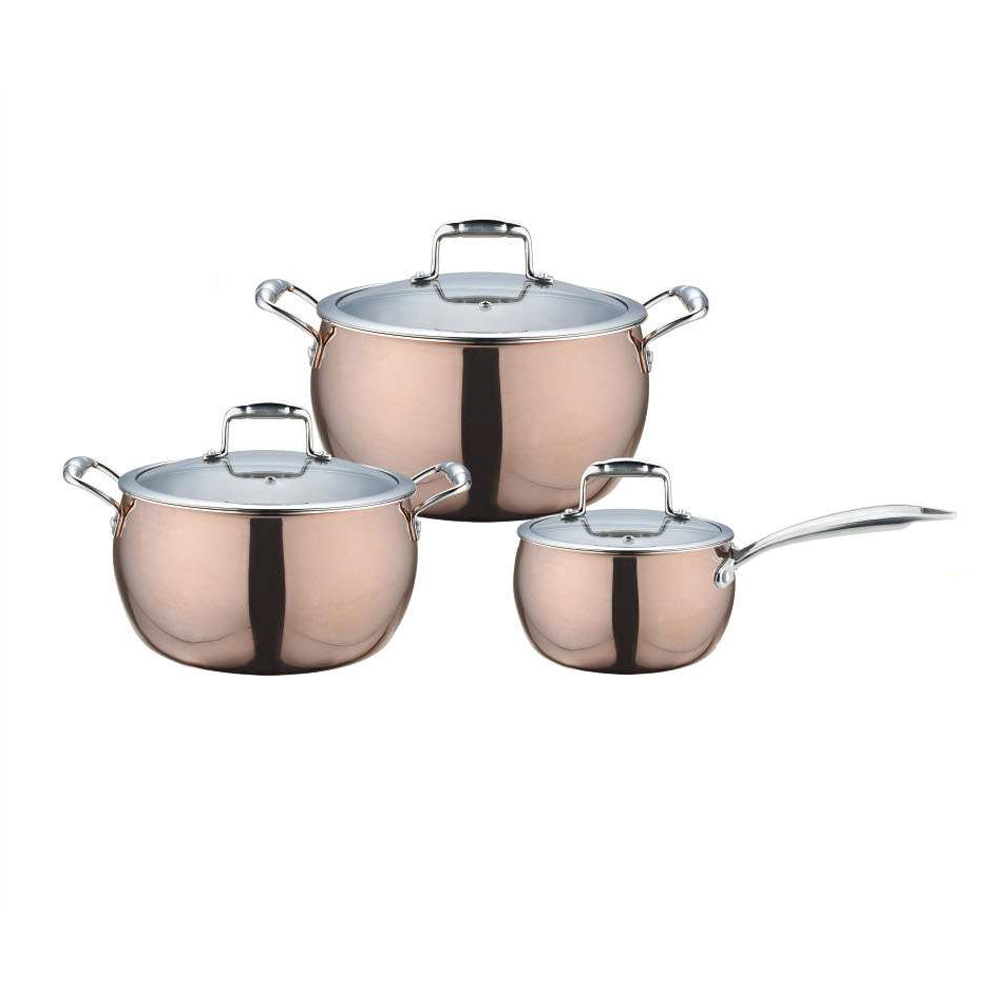
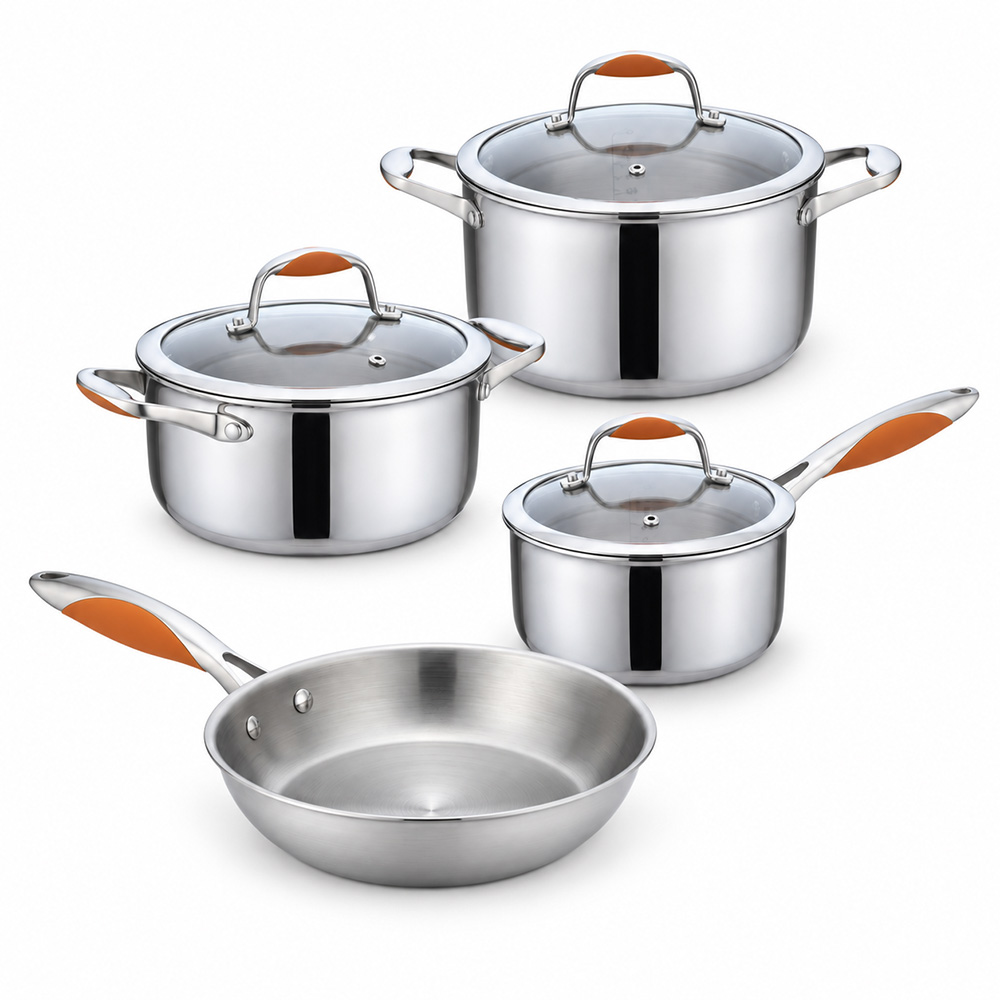
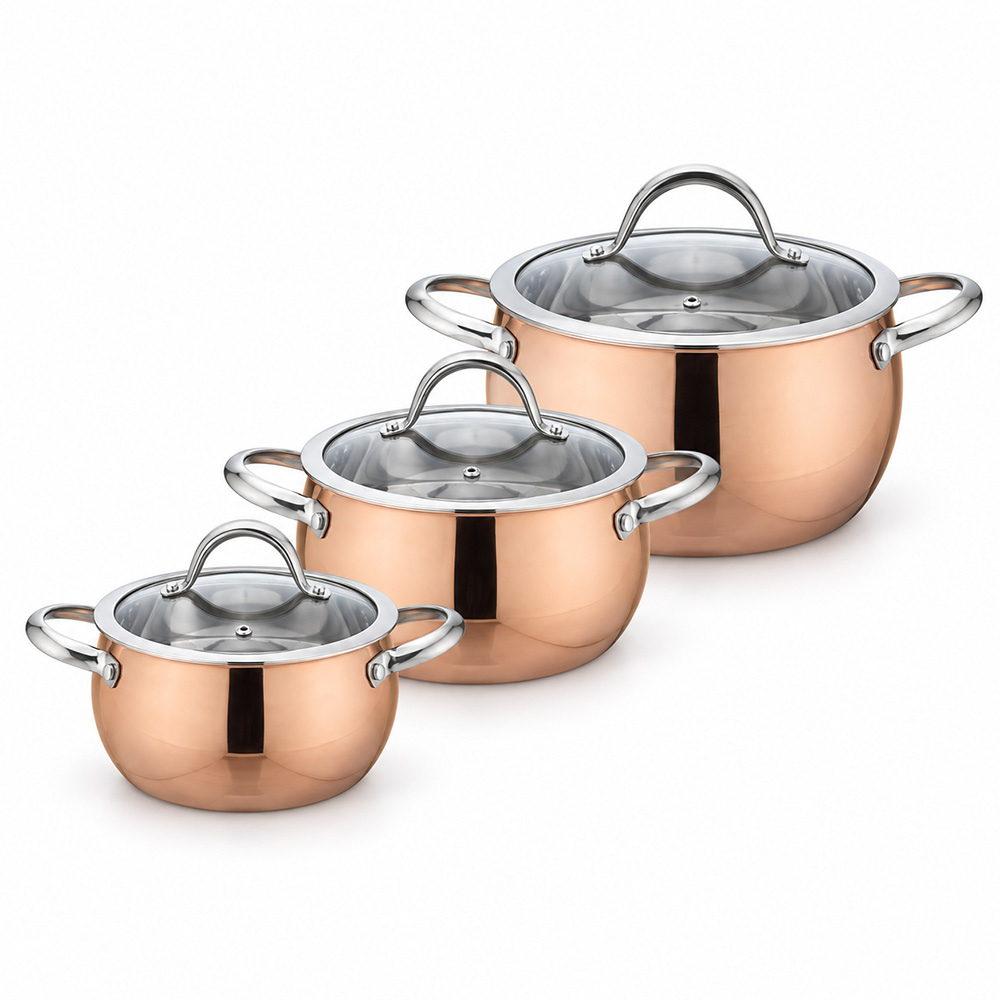
Choose pieces you will use, then compare a tri-ply cookware set with individual purchases. Count cooking vessels separately from covers so a larger advertised piece count does not distract from usefulness.

A 12 inch fry pan might suit family portions; a smaller skillet may handle breakfast. A saucepan, sometimes listed as a sauce pan, covers smaller batches. A 3 quart pot is another selection example. Compare a stock pot with smaller stockpots according to batch size and storage space.

Assess handle comfort, pouring rims, weight when filled, and lid fit. “Heavy duty” and “well made” are descriptions, not measurements. For pots and pans from Tramontina, Cuisinart, Member’s Mark, or All-Clad, compare documented specifications without assuming equivalent designs. Read All-Clad’s exact model details just as carefully as any other tri-ply line.


Tri-ply vs other pan materials: which suits your cooking?

Choose by task, handling, and maintenance. No construction suits every meal.

Option Reasons to consider it Tradeoff
Single-layer stainless Simple, durable surface Without a conductive core, heating may be less uniform.
Disc-bottom construction Conductive material beneath the base Sidewalls lack the same conductive coverage.
Cast iron Stores energy well for browning Usually heavier and slower to respond; bare versions need seasoning.
Coated nonstick options Easier release for delicate foods Coatings impose utensil, temperature, and care limits.

What does clad construction mean for everyday cooking?

Bonded construction combines metals to improve heating performance. Fully clad bodies extend the conductive layer through the sidewalls; a bonded base concentrates it underneath. The words “tri ply” alone do not prove coverage from base to rim. See the construction distinction.

Use a skillet to sear steak, saute mushrooms, or reduce a sauce after browning. Conductive layers help a vessel heat evenly, but food can still scorch. For gentle cooking, lower the setting and simmer with regular stirring. Thickness, burner size, and technique also affect results; tri-ply pans cannot compensate for every misma

How should you cook with and clean stainless steel cookware?

Use moderate preheating, add oil, and let food release naturally before turning. Uncoated stainless steel is not inherently non-stick. Avoid crowding when you fry; work in batches when needed. Preheating and release guidance.

For cleanup, cool before washing, soak stuck residue, and use mild detergent with a soft sponge. Follow model-specific instructions for cleaners. Even a dishwasher-safe claim needs verification; hand washing may be recommended.

Tri-Ply Cookware: Your Questions Answered

Understand tri-ply construction, cooking performance, appliance compatibility, and everyday care so you can compare options and choose with confidence.

Tri-ply cookware combines three bonded metal layers, commonly a stainless steel cooking surface, an aluminum core, and a stainless steel exterior. The conductive core helps distribute heat, while the surrounding layers provide durable surfaces. Exact materials and thickness vary by model.

No. “Tri-ply” describes the number of layers, not how far they extend. Fully clad construction carries the conductive layer through the base and sidewalls, while disc-bottom construction concentrates it beneath the cooking surface. Check for an explicit base-to-rim specification before buying.

Only models with a compatible magnetic base are suitable for induction. The layer count alone does not establish compatibility. Confirm the manufacturer’s induction rating and check your cooktop’s requirements for the vessel’s base size.

Many models can, but temperature limits depend on the complete product, including its handles and cover. Glass lids may have lower limits than the vessel itself, and oven suitability does not automatically mean broiler suitability. Follow the exact model’s instructions.

An uncoated stainless steel surface is not inherently nonstick. Moderate preheating, enough oil, and allowing food to brown before turning can improve release. Avoid excessive temperatures and overcrowding; food that resists turning may need more time before it releases naturally.

Let the vessel cool before washing, then use warm water, mild detergent, and a soft sponge. Soak stubborn residue and use only cleaners permitted by the manufacturer. Avoid thermal shock and harsh abrasives. Check model-specific instructions before using a dishwasher; hand washing may be recommended.

Choose Tri-Ply Cookware with Confidence

Before buying, ask your supplier for clear documentation of metal grades, layer coverage, cooktop compatibility, temperature limits, and care instructions. Check whether the conductive core extends through the sidewalls, and confirm the ratings for handles and lids.

Choose pieces that suit your everyday portions, fit your storage space, and feel manageable when full. Let verified specifications and practical handling guide your decision.