Looking for the right cookware partner? Tell us about your product ideas, target market, materials, and order needs. Our team can help you explore sourcing options, OEM and ODM development, quality requirements, and practical next steps. Share your project details to start a conversation and receive a clear, tailored response for your next project.
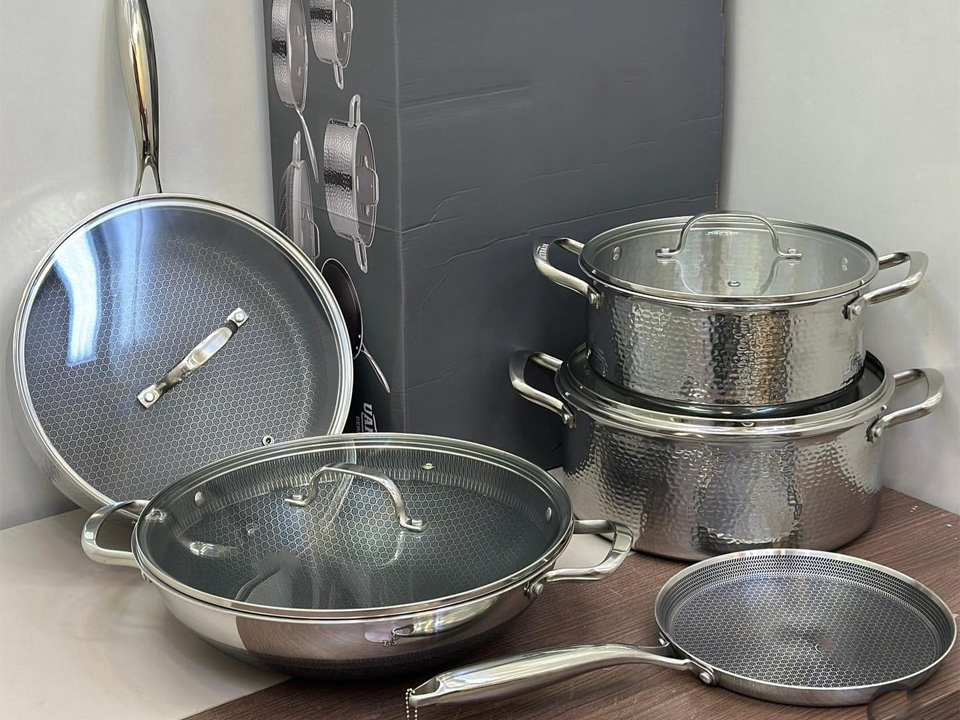
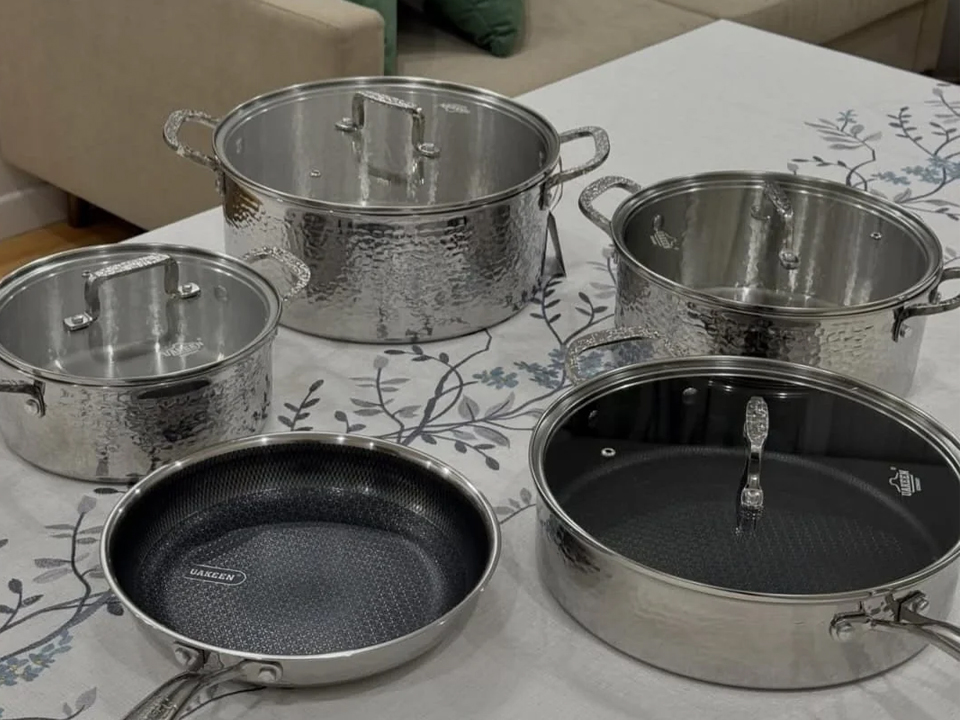
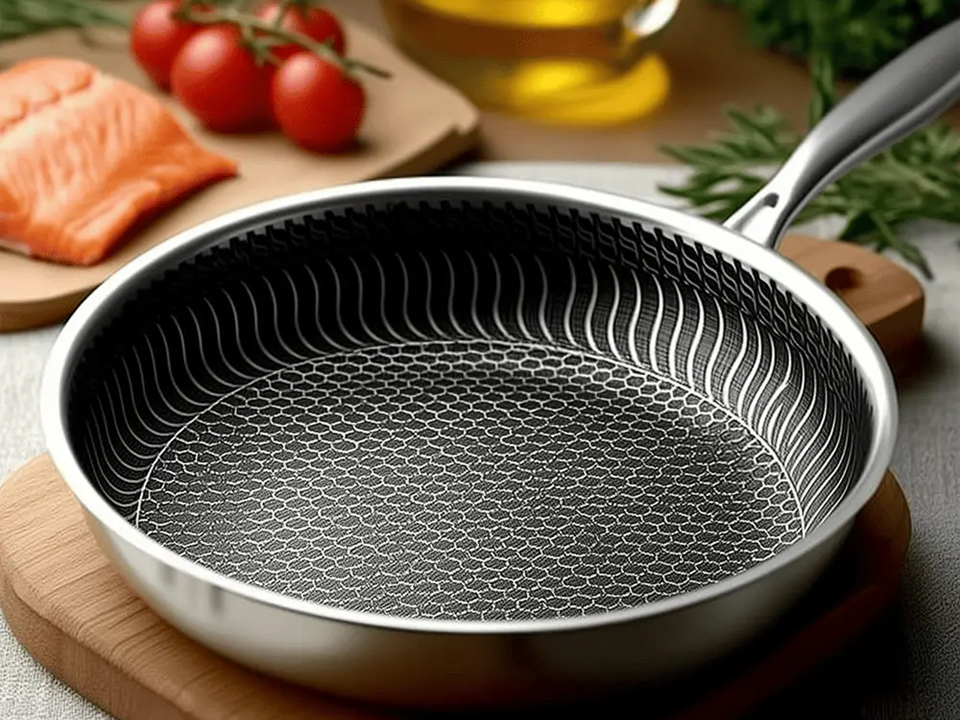
Honeycomb stainless steel cooking equipment assures a sensible combination: stainless steel building with enhanced food release. But the visible pattern informs only part of the tale.
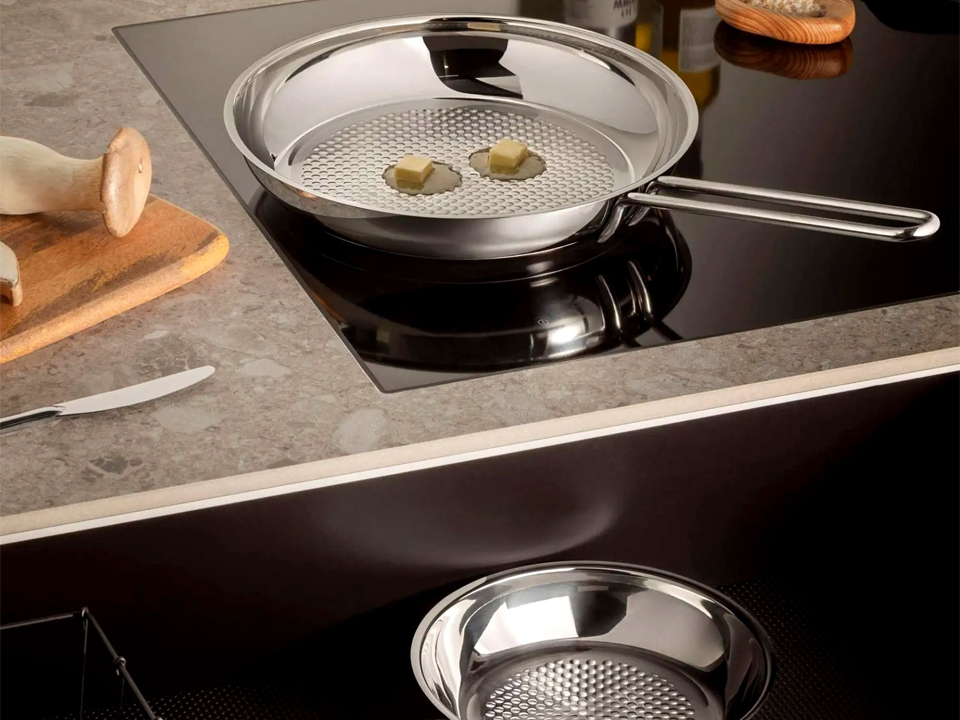
The term honeycomb explains a surface area design, not a global manufacturing requirements. Depending upon the item, the pattern might be embossed, engraved, machined, or integrated with a nonstick finishing. 2 pans can look virtually similar while making use of different materials and delivering various results.
When evaluating kitchenware, I begin with the building rather than the marketing. A photo can not develop layer chemistry, attachment quality, steel grade, or lasting longevity. These details matter to customers comparing frying pans and to importers in charge of product uniformity, customer contentment, and returns.
The genuine question is whether the surface style provides quantifiable benefits– not whether it looks sophisticated.
What Is Honeycomb Stainless-steel Cookware?
Honeycomb stainless steel cookware includes a patterned food preparation surface designed to influence food call, surface area protection, or food-release efficiency. Some models make use of raised stainless steel ridges with nonstick finishing in recessed locations, while others use different surface therapies.
Three components are entitled to focus:
Base product: Stainless steel supplies architectural strength and rust resistance, depending upon its grade and building.
Surface geometry: Increased and recessed areas influence food contact and may help shield parts of a covering.
Launch covering: Where present, the covering contributes to nonstick efficiency and presents added considerations involving attachment, wear, and upkeep.
These functions are not compatible. An innovative pattern can not compensate for an inadequately bound finish, and stainless-steel building alone does not guarantee easy food release.
Customers must request a material spec as opposed to depending on phrases such as costs honeycomb innovation.
Exactly How Does Honeycomb Stainless Steel Cookware Job?
In an usual crossbreed style, increased steel ridges are meant to reduce some straight utensil contact with coated locations, while recessed areas accommodate portions of the nonstick surface. The real effect relies on ridge height, spacing, finish insurance coverage, and cooking conditions.
Take into consideration an egg. An appropriately taken care of standard stainless-steel pan can launch an egg effectively, while a covered honeycomb pan might use a more flexible experience. Neither outcome is assured by surface geometry alone.
Engraved vs. embossed surfaces
Etching gets rid of product with a controlled procedure; embossing creates a pattern with deformation. Other production techniques can develop comparable visual designs.
These distinctions might influence surface geometry, resistances, and production expenses. An etched pattern likewise does not verify that a pan consists of a nonstick layer.
For wholesale purchasers, a construction layout and written product spec offer better evidence than an item photo.
What Identifies Surface Performance?
The best honeycomb cookware is not always the frying pan with one of the most elaborate pattern. Performance relies on just how its materials, geometry, layer, and base building and construction interact.
I would examine 5 variables:
Surface uniformity: Unequal ridges and irregular recesses may impact food call and layer security.
Finish integrity: Confirm structure, attachment, intended operating conditions, and use resistance.
Steel specification: Quality and body building and construction impact rust resistance and mechanical longevity.
Heat distribution: The base layout matters as long as the patterned surface area, especially when cooking temperature levels must remain constant.
Quality control: Manufacturing resistances, finishing problems, and set traceability establish whether provided items match accepted samples.
There is no solitary global ridge height or layer thickness that verifies prevalence throughout every design. Dimensions have to be assessed against the certain building and meant usage.
Is Honeycomb Stainless Steel Cooking Equipment Truly Nonstick?
Some honeycomb stainless steel cookware supplies nonstick performance since it incorporates a suitable launch finish. The honeycomb pattern itself does not make stainless steel inherently nonstick.
Uncoated stainless-steel might call for careful preheating, proper oil usage, and temperature control. Covered crossbreed kitchenware depends partly on its covering chemistry and surface style.
Prior to investing in, check:
Whether a finishing exists.
The proclaimed finishing product and relevant food-contact documents.
Recommended temperature levels, tools, and cleaning methods.
Available performance screening under repeatable problems.
Proof of sturdiness after duplicated use.
Chemical cases also require accuracy. The U.S. Food and Drug Administration discusses its approach to PFAS makes use of in food-contact applications, including particular nonstick cooking equipment coatings. The agency distinguishes these applications from PFAS grease-proofing materials previously made use of in paper and paperboard food product packaging.
An item’s honeycomb appearance does not develop its chemical structure. Customers looking for PFAS-free cookware must request a product-specific material declaration and supporting paperwork as opposed to relying upon wide advertising language.
Honeycomb vs. Traditional Stainless Steel Pots And Pans
Traditional stainless steel cooking equipment typically has a smooth metallic cooking surface. Honeycomb kitchenware adds a distinctive style that may incorporate a layer or other crafted features.
Neither building wins every contrast.
Variable
Conventional stainless-steel
Honeycomb stainless-steel
Surface area
Typically smooth metal
Formed or textured
Food launch
Depends heavily on technique
May boost with an appropriate finishing
Covering
Not naturally called for
Rely on the style
Cleansing
Stuck food might need soaking
Recesses may accumulate residue
Longevity
Rely on steel and building and construction
Additionally relies on covering and pattern stability
Warmth circulation
Depend upon base building and construction
Depends on base construction and surface design
Finest matched to
Cooks that favor an uncoated metal surface area
Users looking for stainless steel building with potentially much easier food launch
A durable conventional pan may outmatch an inexpensive hybrid item in warm distribution or longevity. Alternatively, a properly crafted honeycomb pan might give better ease for delicate foods.
Contrast actual requirements and performance, not marketing groups.
Advantages and Trade-Offs of Honeycomb Cooking Equipment
Honeycomb cooking equipment can use purposeful advantages, but buyers ought to consider its constraints too.
Potential advantages
Enhanced food launch: A suitable covering might aid fragile foods release more quickly.
Surface area protection: Elevated metal functions may decrease some straight call with covered areas.
Stainless-steel building: Many designs maintain a stainless-steel body or outside.
Cooking benefit: Crossbreed styles may appeal to customers that desire easier food launch without selecting traditional covered kitchenware.
Potential downsides
Cleansing: Residue may collect around recessed areas.
Finishing wear: Warm, abrasion, and unsuitable cleaning techniques can harm some layers.
Irregular specs: Similar-looking pans may use various products and making approaches.
Cost premiums: Higher costs are justified just when sustained by significant building and construction or efficiency benefits.
My sight is basic: honeycomb kitchenware ought to gain its premium with proof, not look. If the provider can not clarify the construction or validate durability insurance claims, the pattern is doing most of the selling.
How to Review the very best Honeycomb Stainless-steel Pans
The most effective honeycomb stainless-steel pans are those that match the desired food preparation tasks and have credible evidence sustaining their construction.
1. Demand technical requirements. Validate the stainless steel grade, surface-manufacturing method, covering composition where suitable, and base building and construction.
2. Confirm cooktop compatibility. Induction suitability relies on the actual base design. Do not presume every stainless steel pan services induction.
3. Test food release consistently. Contrast items utilizing the very same active ingredients, cooking temperatures, oil amounts, and cleansing treatments.
4. Take a look at longevity proof. Inquire about repeated-use testing, thermal biking, cleansing cycles, and the standards utilized to identify finishing failure.
5. Evaluation maintenance requirements. Confirm approved utensils and cleaning up techniques prior to acquiring.
One successful demo is not evidence of long-lasting efficiency. Repeatable testing is much more beneficial.
Wholesale Sourcing: What Purchasers Must Verify
For importers and representatives, uncertain product specs can lead to disputes when manufacturing products vary from approved examples.
Beginning by documenting pan dimensions, body building, surface area geometry, coating information, manage products, and cooktop compatibility. Then develop inspection standards for finish damage, irregular patterns, dimensional variant, and packaging defects.
Demand applicable food-contact documentation for the location market, along with batch traceability and treatments for handling production modifications.
Purchasers contrasting alternate cookware assortments can likewise review a 6-piece steel pots and pans set with covers for wholesale supply and a 7-piece sleek steel kitchenware established for wholesale supply.
For finish-led product differentiation, a 7-piece copper-tone cooking equipment set for wholesale sourcing offers one more comparison factor.
These items need to not be assumed to include honeycomb construction. Verify each item’s specifications prior to contrasting surface technology or performance.
Honeycomb Kitchenware Claims That Deserve Analysis
A doubtful customer does not require to presume every advertising and marketing claim is incorrect. The customer requires evidence.
“Scratch-proof”: Ask which utensils and examination methods were used and just how failure was specified.
“Lifetime nonstick”: Request sustaining durability information and clear warranty terms.
“100% stainless steel”: Establish whether this refers to the body, outside, or whole cooking surface area.
“Chemical-free”: Ask for a specific material affirmation; the expression itself is not a meaningful chemical spec.
“Functions on every cooktop”: Confirm compatibility for the specific version.
“Specialist quality”: Ask for specified efficiency criteria rather than relying on the tag.
Manufacturers that can confirm their claims need to have the ability to respond to details technological inquiries. More adjectives are not a substitute for paperwork.
Regularly Asked Concerns
What is honeycomb stainless-steel cookware?
Honeycomb stainless-steel pots and pans includes a formed food preparation surface made to influence food contact, secure parts of the surface, or improve food release. Some models combine raised stainless-steel ridges with recessed nonstick coating, while others use various constructions, so customers must confirm the materials and surface area design of each item.
Is honeycomb stainless-steel pots and pans nonstick?
Honeycomb stainless-steel pots and pans might offer nonstick performance when its layout includes an ideal release finish, but the pattern alone does not make stainless-steel inherently nonstick. Efficiency depends on the covering, surface area geometry, food preparation temperature level, food kind, and upkeep, so the item specification ought to confirm whether a finish exists.
What are the advantages of honeycomb pots and pans?
Honeycomb pots and pans might provide better food release when coated, partial security of coated areas through increased surface functions, and stainless-steel construction. These advantages depend upon the certain layout and needs to be weighed versus cleansing demands, coating resilience, and heat circulation instead of assumed from the honeycomb pattern alone.
Is honeycomb cooking equipment better than conventional stainless steel?
Honeycomb cooking equipment is not widely far better than traditional stainless steel due to the fact that both styles serve various priorities. A hybrid frying pan may use easier food launch, while an uncoated stainless-steel frying pan gives a metallic food preparation surface area without a nonstick layer. The appropriate selection depends upon food preparation habits, maintenance, products, and confirmed efficiency.
Does honeycomb cookware include PFAS or PTFE?
Honeycomb pots and pans might or might not include PFAS-based materials or PTFE, a fluoropolymer made use of in some nonstick layers. The surface area pattern does not identify the finishing chemistry. Purchasers looking for specific chemical exclusions ought to request a product-specific product affirmation and appropriate supporting paperwork.
Is honeycomb kitchenware ideal for induction?
Honeycomb cooking equipment can work with induction when its base is designed for induction food preparation. Stainless steel make-up and surface appearance alone do not guarantee compatibility, so buyers must inspect the supplier’s specification for the exact version and designated cooktop.
What should wholesalers inspect before sourcing honeycomb pots and pans?
Wholesalers need to validate the steel spec, surface-manufacturing approach, coating details, base building, food-contact documents, and performance-test outcomes. They need to also establish manufacturing tolerances, batch traceability, inspection criteria, and change-control procedures to make sure provided products match the authorized example.
Select Pots And Pans by Construction, Not Appearance
Honeycomb stainless-steel cooking equipment is a surface-design category, not an assurance of premium nonstick efficiency, scrape resistance, or long life. Those end results depend upon materials, making quality, and the evidence sustaining the ended up product.
Consumers should contrast cookware against their food preparation and maintenance choices. Importers and suppliers ought to focus on clear requirements, legitimate screening, and constant production.
If you are assessing kitchenware for retail or wholesale supply, contrast the real construction, request sustaining paperwork, and develop quality requirements before positioning an order. The best purchasing choice is improved proven specifications– not the most influential product summary